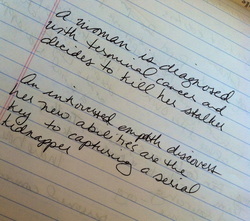
 The first time I pitched, I was terrified. It was obvious – I was nearly shaking and stuttered a bit – but both of the people I pitched to were kind and encouraging. Despite the nerves, I was prepared and they both expressed their surprise that I was not already published because I knew what was expected of me. I did my research, focusing on the articles written by agents and prepared as much as possible. With the PNWA conference here, I thought I would share what I have learned.
Writing Fiction? Finish Your Manuscript Non-fiction writers have different rules than fiction writers. Oftentimes, non-fiction writers can come in to a pitch with one or two polished chapters. This has a lot to do with the fact that non-fiction already has a solid conclusion. Think of a memoir – we know where that person's life ended up at the time of writing. I believe fiction writers, especially first time authors, should have a finished manuscript. I was shocked when an editor told me that the majority of the people who pitched to her were not done, and many were just pitching an idea. There are a million ways a novel can go sideways as you write a fiction piece, and it is difficult to know when the novel will be completed. Wait to pitch your book until it is finished. Update 7/20/14: I stood up at the PNWA conference and asked the panel of editors: What state should the manuscript be in when someone is pitching? It was unanimous. They all recommended that not only the manuscript be finished, but it should be beyond its first draft. This is your chance at a first impression, and you are shooting yourself in the foot if it is not your best product. Do Your Research Preparation is the key to success. Before the conference, learn who you are pitching to, which agency they are with, and their submission guidelines. Every agent listed at the writing conferences I have attended has had a bio on their agency website that details the genres they work with and their submission guidelines. Some go so far as to state that it would be prudent to draft a marketing plan, although this is rare (do it anyway – it's a great learning process and will help you speak more intelligently about your novel, target demographic, and plans for social media). It is pretty normal to start with a list of 20 agents and whittle it down to pitch to two or three. Many of the smaller conferences will have one or two agents who will listen to a pitch for any genre. I have learned that this means they will listen to pitches but only show interest within genres their agency represents. If you have a vampire book and the agent specifically states he hates vampires and no one else at the agency is interested in anything paranormal, it's probably not going to work out. And you know what? That's okay. You want an agent who enjoys working with people who write what you love. Know What To Expect If you walk into a room with an agent for your ten minute (or less) block of time, know what to expect. It flies by, so it is critical to know how to spend each of those minutes. There are fabulous articles online, many of them written by experienced agents, outlining what they look for when they meet with an individual. You should expect to spend a brief minute exchanging pleasantries (“How are you? Having a good time at the conference?”) and then jump straight into your pitch. Your pitch should be two to three sentences. If you see nods and smiles, continue on to explain your genre, answer any questions about your story, and speak to your target demographic. I suggest dressing like it is an interview and bringing a pad of paper and pen to take notes. I also bring the first chapter and a synopsis, but it's a security blanket. I rarely hear of anyone being asked for printed materials. Your Pitch A pitch is two to three sentences, and often known as an elevator pitch because it runs the amount of time you would have running from one floor to another. If you don't have their interest by then, you are in trouble and they step off to go about their day. Be sure to pitch your concept with the hook. I recommend that you read Story Engineering to get a better understanding of story structure and the differences between idea, premise, concept, and theme (my review was not entirely flattering, but I believe in what the author has to say enough to recommend it). If you don't have time to read Story Engineering, at least read this article by Larry Brooks explaining concept. Because of the complexity, I will be adding a blog post next week to help illustrate. Keep it short, stick to the point, and practice. If you think your pitch is spot on, but you are relying on Q&A and five paragraphs of follow up to get the novel sold, you aren't there yet. Watch the reaction of people who ask you what your book is about. Do they lean forward after a couple sentences and say things like, “That's really cool” or do they cross their arms, nod and say, “Interesting”? Find a way to describe your book that lets people know why you are excited about sharing it. When you find the right pitch, you will notice your demographic gets excited with you. Act Professionally This is a job interview and these people are taking time away from their home and family to listen to a lot of people pitch their book. If they are short with you, do not take it personally. Everyone has a back story (maybe they had a bad flight or the last guy went a little crazy) and they have bad days just like the rest of us. Be courteous, even if they don't like your story, and thank them for their time. Like I said, this is an interview. If they don't represent your genre or don't see the value in your concept, you are both better off parting ways. You want someone who will be able to easily represent you because they believe in you and your story. Ask Questions If things went well, make sure to write down the details for the next steps (and carry paper so you aren't scribbling on the back of their business card). If they ask for 20 pages, follow it to the letter. Do not add three more pages because of a chapter break. Ask them about their process and questions you have about the agency. It is important to remember that they are representing you - if it's not a good personality fit, you may want to keep looking. If things did not go well and you can handle critique, ask questions. Was it the concept? Is it something they hear a lot? These answers may help you figure out whether your pitch is the problem or if it's a fundamental issue with the story. Note the criticism and think on it later - when you are in a more neutral frame of mind - to determine whether or not they had a point. If you are too angry to hear a critique, smile, thank them, walk out and do some deep thinking. Not everyone is going to like your book, no matter how well you wrote it. Criticism can either be a tool to improve or a source of anguish and torture. The good news is: you get to choose how it impacts you. Do Not Badmouth It's tough to get negative feedback. A novel is a part of us, months of struggle and love poured into so many words. If you had a particularly bad pitch, wait until you have time to go outside and call a friend. Do not go to Twitter or your blog. One of the first things an agent will do when they consider signing on a writer is Google them. Be conscientious of what you put out in the internet - even if you delete a blog rant, there are ways to view the content long after it was taken down. Do not start ranting at the conference. It is a small world and you may blow up a bridge. You never know - you may have a novel in a year or two that would be perfect for the same agent. What have you learned through the pitching or query process? Please leave a comment below. Follow Camela Thompson on Twitter @CamelaThompson
0 Comments
“What are the rules I need to know?” I had talked my husband into going to the Washelli Cemetery so I could do a little book research. He was a good sport about it, and I was relying on him as the subject matter expert. My family isn't big on funerals; many people include a clause in their wills forbidding it. They flat out avoid graveyards. My husband stopped between plots, shifted the camera bag to his other side, and looked back at me. “What do you mean?” “What should I not do?” I was standing with a cell phone in one hand and my DLSR camera around my neck. With my feet firmly planted on the path winding around the cemetery, I stood looking at the graves as though a hand would burst through the ground and grab me by the ankles. I had no idea what the do's and don'ts were. Yes, I am one of those people who likes bullet points and checklists. I was a little disappointed when I didn't find a list of rules at the cemetery entrance or their website. “My aunt told me not to stand on the graves once.” I wanted to laugh. The grass was peppered with headstones at staggered angles, packed so closely that I couldn't see how people could be laying underground without overlapping. It occurred to me that perhaps the stone covered the head – which would make sense etymologically. Duh. “Where am I supposed to stand?” Lance shrugged and started taking long strides up the hill. I stepped on the grass, walked up two plots, and yelped when I realized I had stepped onto a grave. I tried traveling laterally for a while, taking giant steps to avoid walking on someone. I looked up and Lance was standing in the distance with his hands on his hips, head cocked to one side. I muttered something angry and tried to move faster, catching up to him as he moved to the next headstone. “Some of these are really old. I think these people were married.” 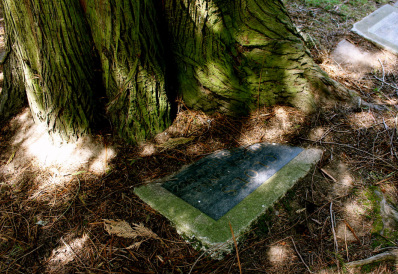
The couple died in the 1920's, a few years apart, and one was buried close enough to a tree that the headstone was partially obscured. A light grey marker was near by and covered in needles. I brushed the needles off with my fingers and frowned. The grave was for a baby with the same last name buried fifteen years before the couple. Their child. “That's sad,” I said. Lance nodded and started walking off. I had to trot to catch up, doing a weird stagger and hop to avoid offending anyone. After looking at the grass more closely, I decided to relax a little bit about where I was stepping. “They use a riding lawnmower.” “And a weed wacker around the headstone edges.” “So I don't have to be so careful?” I stopped to take a few pictures of a grave covered in symbols. “If they saw the way you were moving around, they'd either laugh or realize you were doing your best. Probably laugh.” Fair enough. We were quiet, pointing out graves that had interesting symbols or a spot reserved next to a spouse for someone who either had yet to pass away or had moved on in life and was buried somewhere else. We both mused about that and I may have said, “Well, it says 'til death do us part' right? So the obligation ends there, I suppose.” That earned me a smirk and a head shake. We both spent time doing math, trying to figure out if people had passed away during a war. 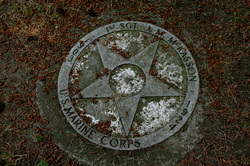
The Washelli Cemetery has been in operation since 1885. We had picked the older part of the cemetery, only stumbling on the younger graves at the very end. It was harder to walk by headstones with wilting flowers or picture memorials that were elaborate. I felt sad standing over one in particular. The young age and the amount of text on the stone gave me a bad feeling about how his life had ended. Unfortunately, I wasn't wrong.
With the genres I tend to write about, I'm sure it wasn't my last time in a cemetery. I feel more confident about how to respectfully get the photographs and information I need to write a scene, but I'm not sure I'll ever be comfortable walking around unless the cemetery has been out of commission for a period of time. Several decades make it easier to casually wonder what their lives were like without growing too macabre. I'm rather squeamish for someone who writes about murder mysteries and horror, but I like those scenes on paper rather than real life. Have you done research in a cemetery? What kind of best practices would you pass on to a fellow researcher? Follow Camela Thompson on Twitter: @CamelaThompson My favorite characters tend to be damaged, especially the male love interest. This pull isn't an unexpressed need to fix a broken man. I simply get very irritated when characters are too perfect. It was my one complaint about a few books written by the great Louis L'Amour, particularly The Walking Drum. My grandfather loves the book and encouraged me to read it. I struggled through it even though it was beautifully written and quite interesting. Why? The protagonist was good at everything. He was the best horseman, could beat anyone with any weapon - he could even do acrobatics like a boss. I remember yelling at the book about a third of the way through: "Aren't you bad at anything???" 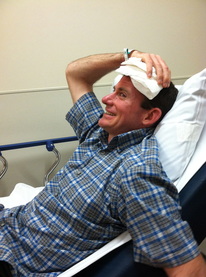 My husband took the "scars are hot" thing
a little too seriously. He's still my hero.
I have heard that once movies are being made about a trendy genre, it is on a downward spiral in the book world. Use the word 'vampire' at a writing conference or in front of some authors and you may see wincing and an eye roll or two. The Young Adult market is flooded, dystopian is overdone, and vampires are so eight years ago. Right now it's about edgy women's contemporary literature and witches. Which may or may not change at any given time. Without notice.
I am not an expert on publishing, but I know the vampire books I enjoy have been published over the years - not just in a five year frenzy period. It seems to me that during a popular upswing, more books are accepted by publishers because the genre is making money. When a genre starts to calm down, novels aren't completely locked out of the market because they contain the subject matter, but it becomes more difficult to publish a story. It's simple economics. When demand is lower than supply, the amount of product in the supply chain has to drop. Production doesn't stop, but there is a shift in quality as consumers realize they have more to choose from and can be picky. In order to succeed in a flooded market, authors need to put in more effort and produce a quality piece. Maybe that isn't a bad thing. It is easy to find reasons to be discouraged and stop writing. There are more books on the market every day and the chances of success are daunting. The stories drive me to keep going. The words flow when I let the story take me where it will, and the story hasn't led me to a cozy little cafe on a scenic hillside. My mother would love me to write a romance in Provence, but it just doesn't work on paper. I will welcome critique and work to improve my craft, but I won't apologize if a vampire happens to appear. I know that if the concept is strong enough, there is still a chance. If you have a killer concept and great character development, you should write that dystopian story! Have you considered changing major elements or setting aside a novel due to popular opinion? I'm not sure how other writers get their inspiration, but my best ideas jump out at the oddest times. Sure, I've had some decent scenes pop into my head while I was listing out concepts on paper or bouncing them off my husband, but the really good stories come out of no where. A conversation at work, an annoyance with a product, or daydreaming about the person in front of me at the coffee shop could each be a potential source.
Where I have failed to find a story has surprised me more than the sudden flashes of insight. I have not had success using my own fears as a basis for a story. I am typically much better off imagining a creepy character and building a story or focusing on a strange element. My fears are boring and, dare I say, normal. I wouldn't enjoy writing an epic battle about a woman conquering a tiny spider with a shoe. It just doesn't speak to me.
Strange thoughts pop into my head, but the real trick is getting it to sing on paper. I know an idea has really taken root and turned into something successful when someone I know reads it and looks at me like they are seeing me for the first time. That look usually says, "Who are you and what made you this way?" When writing horror, the words, "But, you look so normal," are actually a good thing. Where do you get your inspiration? At each writing conference, there is always at least one "Aha!" moment that makes the expense or travel well worth the effort. This conference was no exception, and I am very pleased that my husband and I made the trek to Wenatchee. The authors and subject matter experts chosen to present at the conference did a fantastic job. Friday evening, Jess Walter was the keynote speaker. I was immediately captivated by his wit, but I appreciated his honesty as an author. A lot of writers shy away from baldly stating how difficult it is to write a story that is marketable, let alone captivating to a broad audience of readers. Jess Walter managed to do that magnificently with Beautiful Ruins, but it took him 15 years. Part of me sat there thinking, "Thank God," while the other part thought, "Oh s@#$." While it's a bit of a relief to hear that everyone can struggle (and this is a man who produced best sellers in the interim), it made me realize that it's time to put a couple of my concepts in a drawer for safe keeping and walk away for a while. Maybe a year. Maybe eight. As my grandmother would say, straining is a great way to get hemorrhoids - might as well not force it. The honesty continued with Larry Brooks. He had some fantastic guidance around fiction writing. I wasn't able to stay for his presentation on Sunday, and I was extremely sad after sitting in his classes on Saturday. I was so impressed that I purchased one of his books, Story Engineering, and plan on devouring it, taking notes, and immediately applying the logic to a few of my active projects. His no nonsense approach could be heavy handed for some, but I personally value a straight shooter. Critique is an integral part of improving my craft: it's the only way to know what's broken. Write On The River also offered the opportunity to meet with an editor and an agent. I originally signed up a couple months ago thinking, "We'll see." I decided to go through with pitching on Monday and threw myself into researching what is expected of the author. This research opened up a world I wasn't expecting and wish I had the foresight to delve into sooner. But more on that later. My only critique is of the brown bag on Social Media. While the gentlemen presenting had some really valid points around branding and Social Media, I wish they had emphasized the importance of establishing an online presence and brand prior to submitting for publication. My key takeaways from Write On The River:
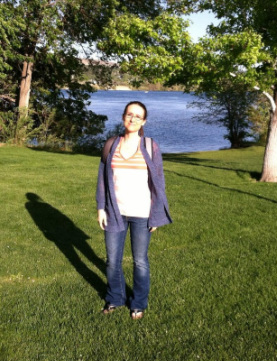
It really was river adjacent! And yes, I do normally sparkle in sunlight.
|
Camela ThompsonFreelance writer and Dark urban fantasy author featuring vampires with bite. My BooksCategories
All
Archives
July 2020
|
 RSS Feed